

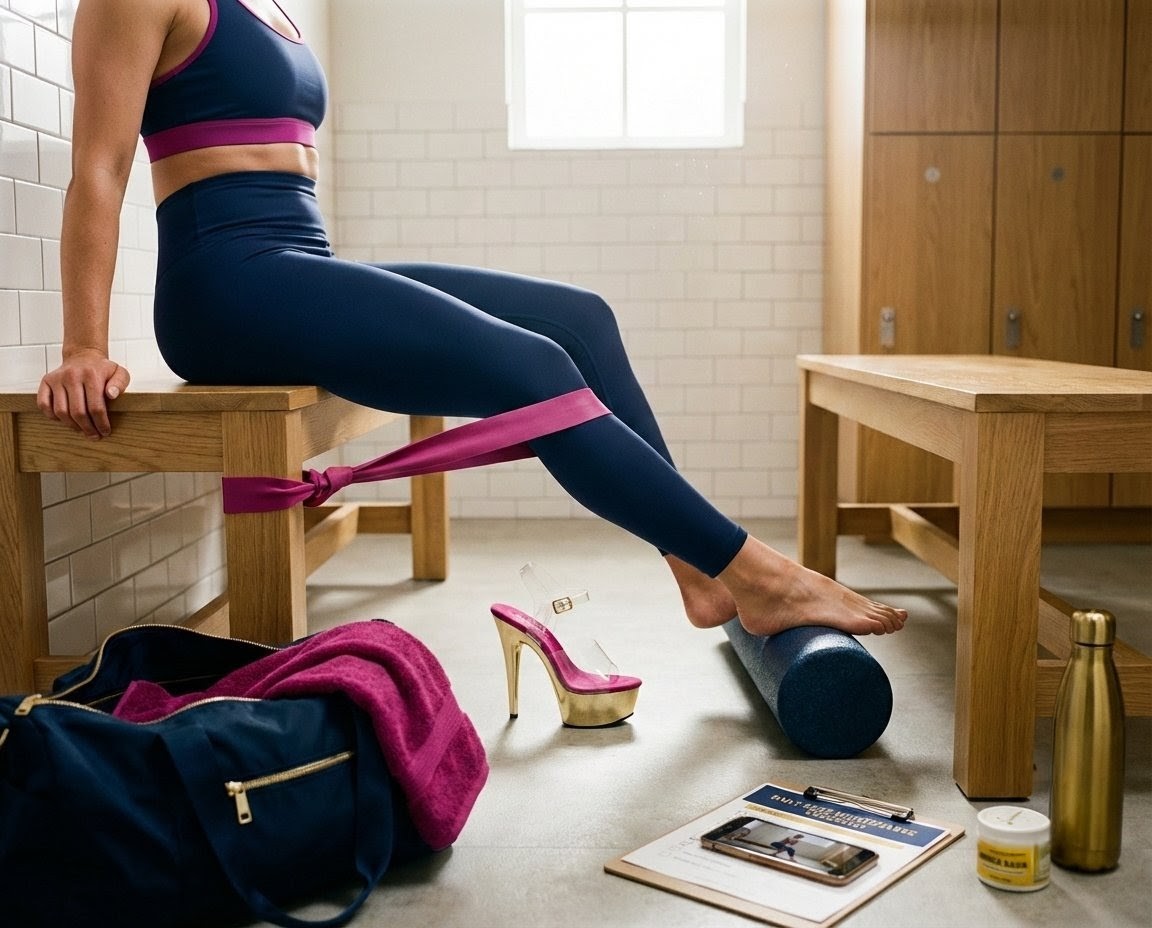
Babe, sit down for a second and take the weight off. I noticed you winced when you stood up from that last floor-set. I know, I know- we tell the customers it’s just “part of the show,” but between us, that clicking sound in your left patella isn’t a sound effect.
Your knees are the primary pieces of heavy machinery in the factory. You wouldn’t let a million-dollar press rust out or grind its gears, right? In this industry, “burnout” usually starts in the joints long before it hits the brain. Joint longevity isn’t a luxury; it’s an operational requirement. If you want to be the girl catching the biggest bags in 2030, you have to protect your money-makers from the constant shear force of six-inch heels and the high-impact reality of floor-work.
The Geometry of the Six-Inch Lean
Let’s talk shop about the physics of what we do. When you step into a six-inch (or higher) platform, you are essentially putting your body into a state of constant “quad dominance.” Because your heel is so far above your toes, your center of gravity shifts forward. Your quadriceps have to work overtime just to keep you upright, which pulls your kneecap- the patella- hard against the groove in your thigh bone.
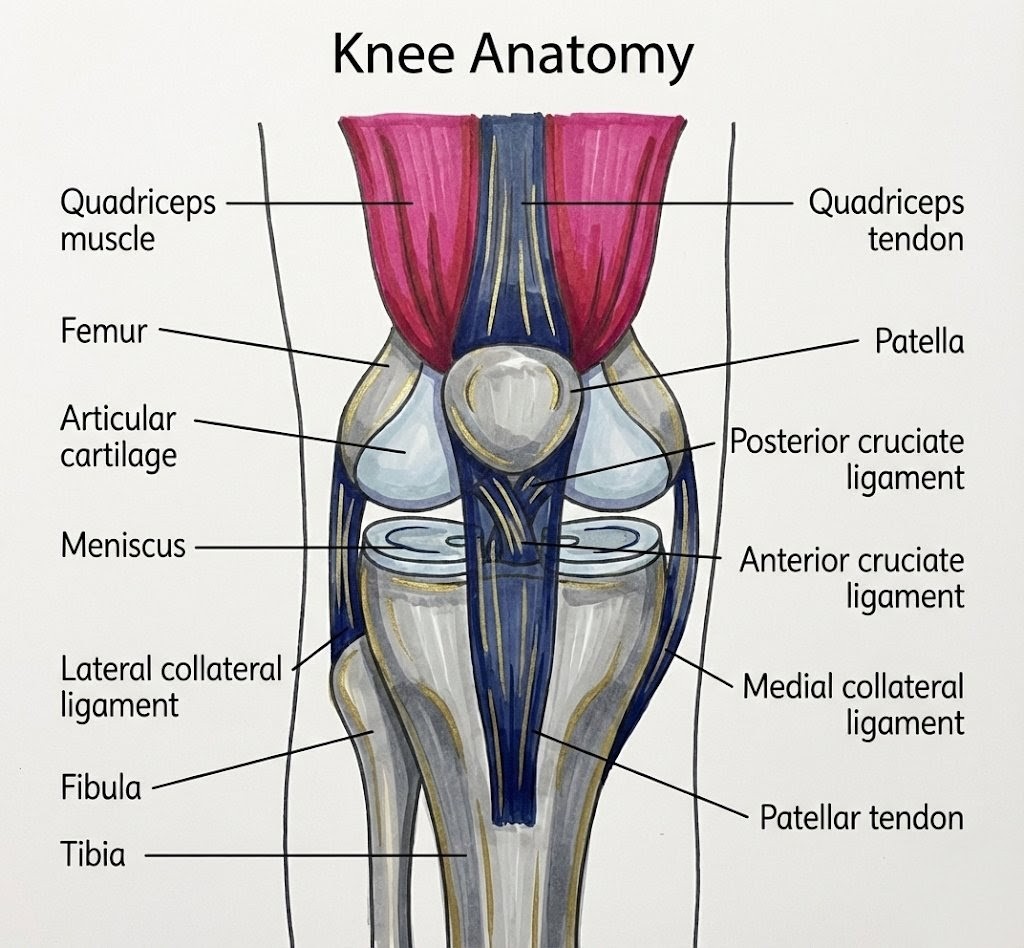
Over an eight-hour shift, that’s thousands of pounds of pressure grinding away at the cartilage. If your glutes and hamstrings are “turned off” because the heels are doing the work, your knees take 100% of the impact every time you walk the floor or drop into a split. We have to recalibrate the machine, so the pressure is distributed through the muscles, not just the bone-on-bone connections.
Strength as Armor: Building the Support System
You can’t just stretch your way out of knee pain. In fact, if you’re hypermobile (which many of us are), over-stretching the ligaments around the knee can actually make things worse. You need stability. You need to build a suit of muscle armor that keeps the joint tracking straight, so it doesn’t wobble every time you “clack” your boots.
To keep your business running smoothly, you should integrate these specific strength drills into your off-clock routine at least three times a week:
- Terminal Knee Extensions (TKEs): Using a resistance band anchored to a pole, place it behind your knee and practice straightening your leg against the tension. This specifically targets the “VMO”- the teardrop-shaped muscle on the inside of your knee that keeps the cap from sliding out of place.
- Spanish Squats: These are a lifter’s secret. By leaning back against a heavy behind your knees while you squat, you take the pressure off the joint and force the quads to work in a way that actually heals the tendon.
- Tibialis Raises: Don’t ignore your shins. The muscle on the front of your shin is your first line of defense for impact. Lean your back against a wall and lift your toes toward your shins for 20 reps. It’s a gamechanger for heel stability.
- Glute Bridge Marches: Your glutes are the “power steering” for your needs. If your butt isn’t working, your knees are doing the steering- and they aren’t built for that. Keep those glutes firing to take the lateral load off the joint.
- Slant Board Poliquin Step-Ups: This mimics the angle of the heel but in a controlled, strengthening environment. It builds the capacity of the patellar tendon to handle the “lean” without snapping.
The Floor-Work Safety Protocol
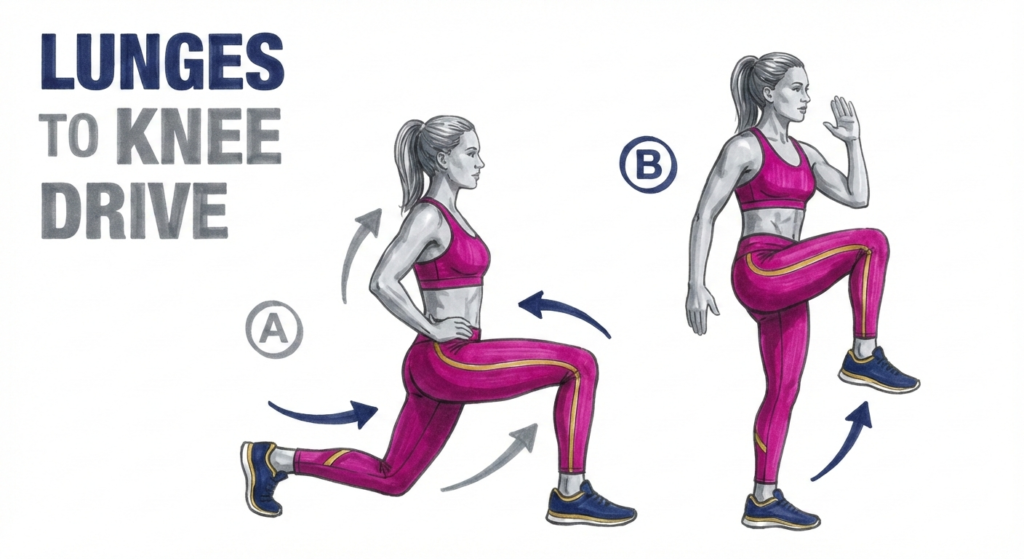
The floor is where the most “accidental” damage happens. We get caught up in the vibe, the music is loud, and we drop to our knees like they’re made of steel. They aren’t. Every hard impact on a hardwood or tile stage floor creates micro-trauma in the prepatellar bursa (the fluid-filled sac that cushions the joint).
- The “Slow-Motion” Landing: Never let gravity win. If you’re dropping to your knees, your glutes and core should be decelerating you the entire way down. If you hear a “thud,” you didn’t control your descent.
- Point the Toes to Protect the Nose: When you’re on the floor, keeping your toes pointed helps engage the posterior chain, which creates a tension “bridge” that supports the knee joint.
- The Lateral Roll: Instead of dropping straight onto the kneecaps, try to roll onto the fleshy side of the calf or thigh. Transitioning through the “soft tissue” areas saves the “hard tissue” for the long haul.
- Knee Pad Integration: Look, babe, use the damn pads during rehearsals. Save the “naked” knees for the actual shift. There is no prize for bruising your way through a practice session.
- Surface Vetting: Before you start a set, do a quick “recon” of the floor. Any slick spots or uneven boards change how you land. Adjust your movement to the “terrain” to avoid a twist.
Mobility vs. Flexibility: The Active Range
There’s a big difference between being able to pull your leg into a split and being able to control that leg while it’s moving. We need Active Mobility. This means your muscles are strong enough to support the joint at the very end of its range of motion.
If you have “passive flexibility” but no strength at the end of the range, that’s when the ligament tears happen. We want to be fluid like water, but solid like ice. Incorporating “Cossack Squats” and “90/90 Hip Switches” into your warm-up ensures that your hips are doing the rotating, so your knees don’t have to. The knee is a hinge; it only likes to go back and forth. If you’re forcing it to twist because your hips are tight, you’re asking for a blowout.
Post-Shift Decompression
The 24-hour protocol in the Operations Vault applies double to your knees. When you get home and the adrenaline finally stops masking the pain, you need to flush that joint out. Inflammation is the silent killer of cartilage.
Your knees don’t have their own blood supply the way muscles do. They rely on movement and “pumping” to stay lubricated. If you let them stay stiff and swollen after a shift, they start to degenerate.
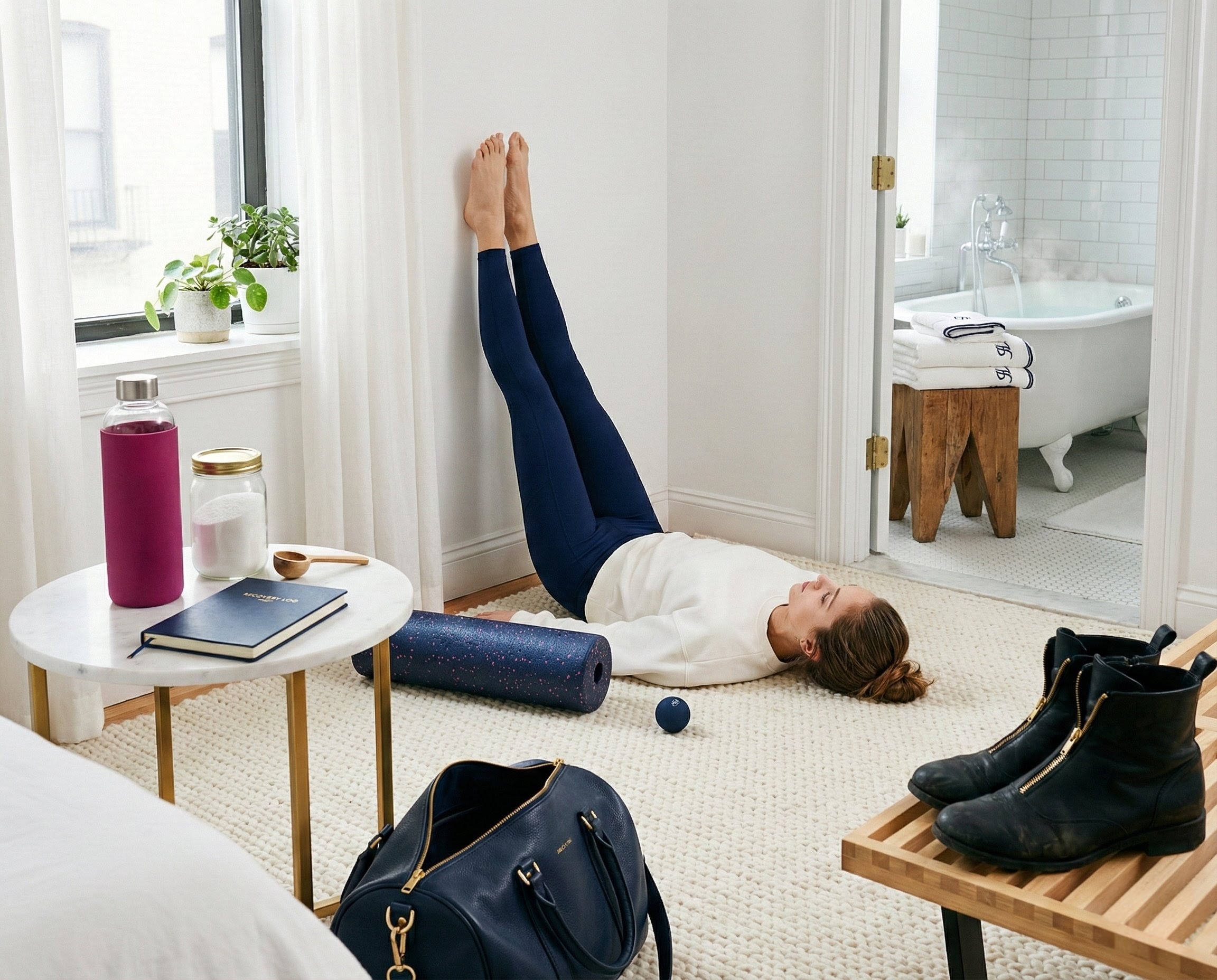
Use the “Zero-Gravity Flush” in the 24-Hour Protocol- legs up the wall- but add a light compression wrap around the knees. This forces the inflammatory fluid out of the joint capsule and back into the lymphatic system. If they’re “hot” to the touch, use ice for 10 minutes, then switch to a warm compress to bring in fresh blood. This “pumping” action is the only way to keep the internal machinery clean.
Longevity Is the Ultimate Flex
At the end of the day, the girl who makes the most money isn’t always the one with the most tricks; it’s the one who can still work the floor five nights a week without a limp. Protecting your knees is a financial strategy. It ensures your revenue remains high and your “medical overhead” remains low.
Treat these drills like a pre-flight check on an airplane. You don’t have to wait for the engine to fail before you check the oil. You do the maintenance, so the engine never fails. Now, put some arnica on those “war wounds,” get your foam roller out, and let’s get those money makers ready for the next bag.






Leave a Reply