


Sit down for a second, babe. I see you over there rubbing your arches, and I know exactly what pair did that to you. It’s those clear-strap eight-inches with the shaky base, right? They look fire in the mirror, but they’re killing your bag because you can’t walk a straight line to the VIP lounge without looking like a newborn giraffe.
We need to have a real talk about Platform Engineering. In this room, a six-inch (or seven, or eight) heel isn’t just a shoe- it’s a specialized piece of industrial equipment. It is a tool. If your “vibe” looks shaky because your center of gravity is three inches too far forward, you aren’t projecting CEO, you’re projecting “I might fall on you.” If you want to stay in this game long enough to build a real empire or put your kids through college without liquidating your ankles by hour four, you have to understand the physics of what you’re standing on.
The Physics of the Pivot: Why Your Center of Gravity Matters
Let’s get nerdy for a minute. When you’re up that high, your body is essentially a vertical lever. The stability of that lever depends entirely on the pitch– that’s the angle between the heel and the ball of your foot. If the platform isn’t engineered correctly, the force distribution on your metatarsals goes through the roof.
We can actually look at the physics of the pressure. The force Fb exerted on the ball of your foot can be modeled roughly by the ratio of the heel height h to the horizontal length of the Shoe L:
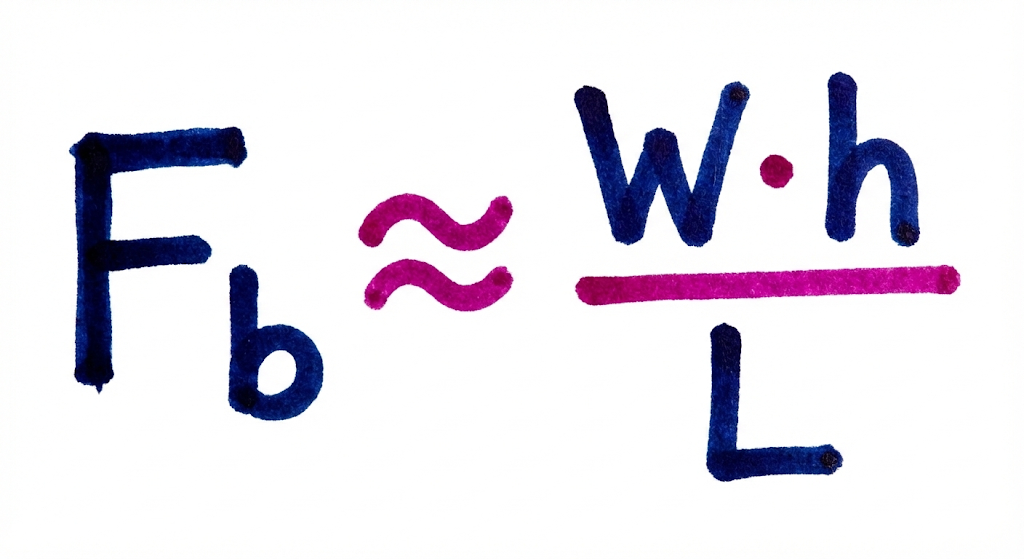
Where W is your weight. When the platform p is thick enough, it reduces the effective h, meaning the “drop” isn’t as steep. If your platform is too thin, you’re basically standing on your tiptoes for six hours. That’s how you get Club Foot by midnight. When your center of gravity is off, your muscles have to overcompensate just to keep you upright. That tension travels up your calves, into your lower back, and straight into your facial expression. You can’t close a whale when your face says “I am in excruciating pain.”
Silhouette Engineering: Elongating the Leg for Maximum Magnetism
We aren’t just wearing these to be tall; we’re wearing them to create an illusion. The right shoe silhouette acts as an extension of your leg line, creating that “infinite” look that draws the eye from across the club. This is Magnetic Appeal.
The goal is to choose a shoe that doesn’t “break” the line at the ankle. A shoe with too many straps around the ankle acts like a visual speed bump- it cuts your leg in half and makes you look shorter. You want a silhouette that flows. This is why the classic clear heel is the industry standard; it disappears, leaving only the height and the arch. However, a solid-colored platform with a vertical T-strap can actually elongate the foot even more, leading the eye straight up.
The Arch Economy: Saving Your Career One Shift at a Time
Your arches are your currency. Once you collapse them or develop chronic plantar fasciitis, your hourly ROI drops to zero because you literally can’t work. Saving your arches is about more than just “toughing it out”; it’s about the Arch Economy– the strategic management of your physical energy.
If you spend your whole shift in a shoe with zero arch support and a flexible sole, your foot is doing 100% of the work. You want a shoe with a rigid shank. A rigid shank acts like a bridge, transferring your weight from the heel to the platform without letting your arch dip. This keeps your foot in a neutral “power” position. When your foot is supported, your walk becomes “liquid.” You glide. That glide is what makes a client stop mid-sentence and follow you with his eyes. It’s the difference between looking like a worker and looking like the prize.

The 5-Step Shoe Audit: Before You Buy
Before you drop $100 on a new pair of platforms just because they’re sparkly, you need to put them through the Operations Vault. If a shoe fails any of these steps, it stays on the shelf.
- The Table Wobble Test: Place the shoe on a flat surface and give the heel a tiny poke. If it wobbles or tips easily, the base is too narrow for your center of gravity.
- The Shank Stress Test: Try to bend the shoe in half. If the middle of the shoe (the arch area) is soft and flexible, it offers zero support. You want a “dead” shank that doesn’t bulge.
- The Pitch Assessment: Look at the angle from the heel to the toe. If it looks like a 90-degree-drop, your calves will be screaming in twenty minutes. Look for a “rocker” sole that helps you transition your weight forward.
- The Strap Security Check: If it’s a clear strap, check the heat-reactivity. Cheap plastic will stretch and slip when your feet get warm, leading to “ankle roll” during a spin.
- The Weight Distribution: Wear both shoes and stand still. Do you feel the weight in your heels or strictly on the balls of your feet? If it’s all in the front, the engineering is trash.
Locker Room Foot Care: The Maintenance Protocol
Your feet are your tires- if you don’t rotate and maintain them, you’re going to have a blowout. You need a pre-shift and post-shift protocol to keep your “tools” in working order.
- Tennis Ball Therapy: Keep a tennis ball in your locker. Roll your foot over it for five minutes before you put your heels on to wake up the fascia.
- The Cooling Hack: Keep a bottle of peppermint foot spray in your bag. It’s a vasodilator that helps with the swelling during your mid-shift break.
- Toe Spacers are Mandatory: When you get home and take those heels off, put in toe spacers for twenty minutes. It reverses the “squeezing” effect and prevents bunions.
- Elevation is Key: Sleep with your feet elevated on a pillow. It drains the fluid buildup and ensures you don’t wake up with “heavy” legs for your next shift.
- Moisture Management: Never put heels on damp feet. Friction + Moisture = Blisters. Blisters = No Money.

Walk Like You Own the Building
The heels are just the pedestal. The real “engineering” is happening in your mind. But it is a whole lot easier to maintain that mindset when you aren’t worried about your ankle snapping off.
Choose the right silhouette, respect the physics of the platform, and protect your arches like they’re your keys to the vault. When your walk is stable, your confidence is stable. And when your confidence is stable, you’re in the perfect position to turn those Pole Gains into Portfolio Growth. Now, get back out there and walk like you already have the deed to the club in your locker.





Leave a Reply